
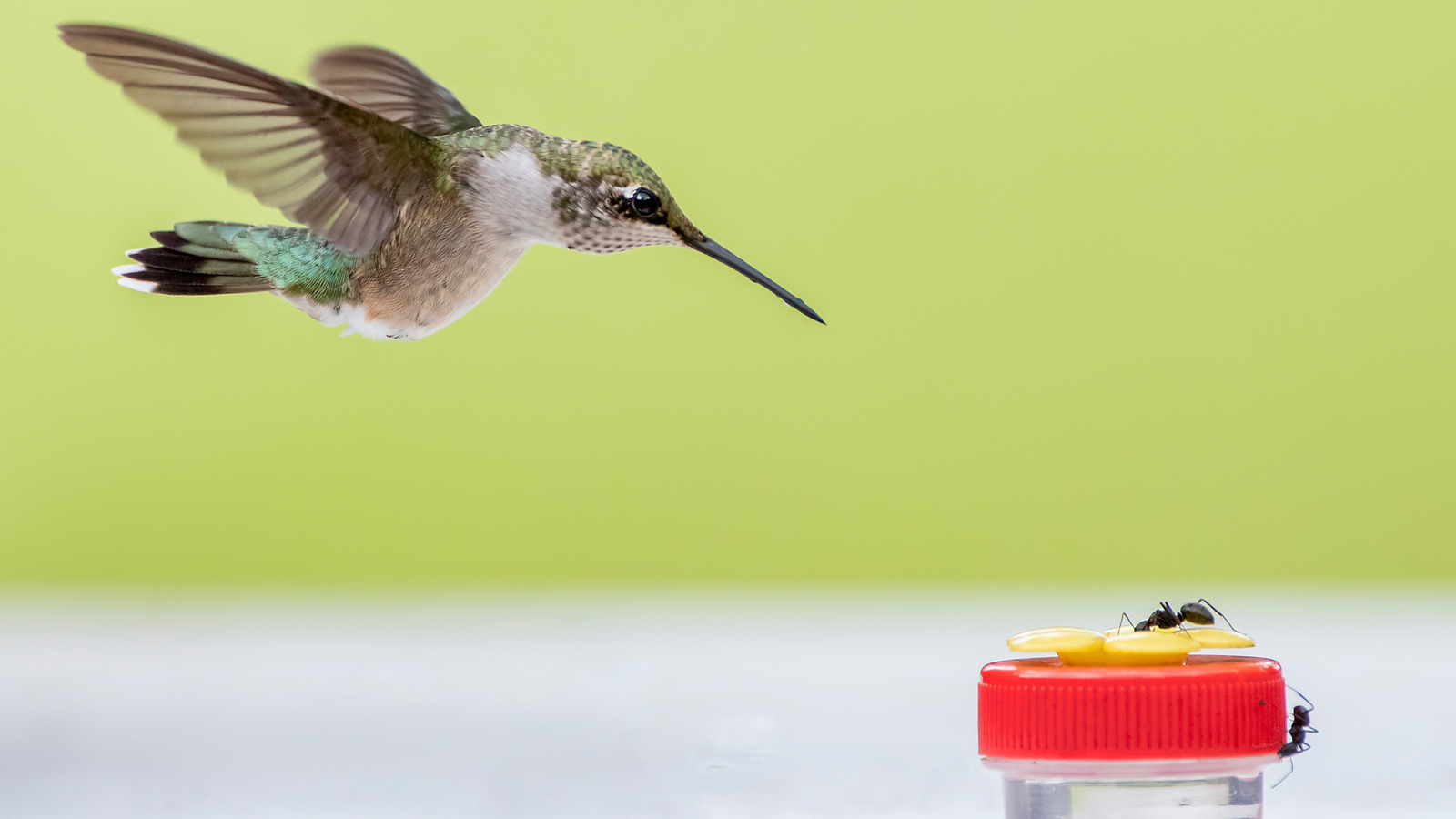
Are ants invading your hummingbird feeder and ruining the sweet experience you look forward to? You’re not alone.
These tiny pests can quickly turn your colorful feeder into an ant highway, making it hard for the hummingbirds to enjoy their meal. But don’t worry—there are simple, effective ways you can stop ants from taking over your feeder for good.
Keep reading, and you’ll discover easy tips that protect your feeder and keep those buzzing beauties coming back, without any unwanted guests.
Credit: www.housedigest.com
Why Ants Are Attracted To Feeders
Ants love the sweet nectar in hummingbird feeders. The sugary liquid is an easy food source for them. They can smell the sugar from far away and follow the scent to the feeder. Once they find the feeder, ants gather in large numbers. They crawl inside the feeder to reach the nectar.
Ants are also drawn to the warmth of the feeder. The sun can heat the nectar, making it even more attractive. The small size of the feeder openings allows ants to enter easily. This makes it hard to keep ants away.
- Sweet nectar attracts ants
- Strong scent guides ants to feeder
- Warmth from sun makes nectar more appealing
- Small feeder openings let ants in

Credit: www.facebook.com
Choose Ant-proof Feeders
Ant-proof feedershave special design featuresthat stop ants from reaching nectar. Look for feeders with a built-in ant moat. This moat holds water, which blocks ants from crossing. Another good feature is a wide base, making it hard for ants to climb.
Materialsalso help keep ants away. Feeders made from metal or thick plasticare better because ants cannot easily chew or climb them. Avoid wooden feeders, as ants like to crawl on rough surfaces.
- Ant moat filled with water
- Wide, smooth base
- Metal or thick plastic body
- No rough or wooden surfaces
Position Feeders Strategically
Place feeders away from trees and plants to minimize ant access. Hang them from smooth surfaces, like metal poles, which ants find difficult to climb. Regularly clean surrounding areas to remove potential ant trails.
Ideal Locations To Avoid Ant Trails
Choose places that ants can’t reach easily. High spots work best. Ants find it hard to climb tall trees. Hang feeders from strong branches. Avoid placing feeders near plants. Ants love to climb them.
Using Hangers And Poles
Use hangers to keep feeders off the ground. Poles are great for this. Make sure poles are smooth. Ants slip off smooth surfaces. Hang feeders from poles safely. Keep poles away from ant homes. Ants can’t reach them easily.
Create Physical Barriers
Applying petroleum jellyaround the feeder’s hanger or pole creates a slippery surface. Ants cannot cross this barrier, stopping them from reaching the nectar. Reapply the jelly often, especially after rain or cleaning.
Using ant moatsis an effective way to keep ants away. These small water containers hang above the feeder and block ants from climbing down. The water acts as a moat, making it hard for ants to pass.
- Sticky tape methodsinvolve wrapping sticky tape around the feeder’s pole.
- The sticky side traps ants trying to climb up.
- Make sure the tape is clean and sticky for best results.
- Replace the tape when it loses its stickiness or gets dirty.
Maintain Cleanliness Around Feeders
Spilled nectar around feeders can attract ants quickly. Clean any spills immediately to keep ants away. Nectar is sweet and ants love it. Wiping spills with a damp cloth helps stop ants from coming near.
Feeders should be washed regularly with warm, soapy water. This removes sticky residue where ants can crawl. Rinse the feeder well to avoid harming hummingbirds. Clean feeders dry faster and stay fresh longer. A clean feeder means fewer ants and happier birds.

Credit: www.facebook.com
Natural Repellents To Keep Ants Away
Essential oilscan be a great natural way to keep ants away from hummingbird feeders. Oils like peppermint, cinnamon, and clovehave strong scents that ants dislike. You can mix a few drops with water and spray around the feeder base or on nearby surfaces. This creates a scent barrier ants avoid.
Using herbsand common household items also helps. Placing fresh mint leaves, basil, or rosemarynear the feeder can keep ants at bay. Sprinkling cinnamon powderor coffee groundsaround the feeder base is another easy trick. Both act like natural repellents ants don’t like to cross.
| Essential Oils | Herbs & Household Items |
|---|---|
| Peppermint | Fresh Mint Leaves |
| Cinnamon | Basil |
| Clove | Rosemary |
| Mixed with Water | Cinnamon Powder |
| Spray around feeder | Coffee Grounds |
Homemade Ant Deterrent Solutions
Mix equal parts of white vinegar and waterin a spray bottle. Spray this solution around the base of the hummingbird feeder. The strong smell of vinegar repels antswithout harming the birds.
Draw lines of chalk or cinnamonaround the feeder’s hanging point or base. Ants won’t cross these lines because they dislike the texture and smell. This is a natural way to keep ants away.
- Use fresh chalk lines and reapply cinnamon often.
- Combine both methods for better protection.
- Check feeder regularly to remove any ants.
Avoiding Harmful Chemicals
Using natural barriers like vinegar or cinnamon can keep ants away without harmful chemicals. Safe, gentle methods protect hummingbirds and your garden environment.
Risks To Hummingbirds
Many chemical sprays and poisons can hurt hummingbirds. These birds are very small and sensitive. Chemicals can cause sickness or death. Even tiny amounts on the feeder or nearby plants are dangerous. Poison can also harm other wildlife and pets. Using chemicals near feeders is not safe.
Safer Alternatives
- Clean feeders regularly with hot, soapy water.
- Use a sticky barrier around the feeder’s pole to stop ants.
- Place feeders on metal poles ants cannot climb.
- Make a water moat around the feeder stand as a natural barrier.
- Try natural repellents like cinnamon or peppermint oil near the feeder.
Regular Inspection And Maintenance
Check your hummingbird feeder often for any signs of ants. Look closely around the feeder and the stand. Ants can be very small and hard to see.
Clean the feeder regularly to stop ants from getting attracted. Remove old nectar and refill with fresh sugar water. Keep the area around the feeder free from spilled nectar.
Use barriers like sticky tape or water moats to block ants. Change or add new barriers if ants find a way past them. Watch how ants behave and change your methods to stay ahead.
- Inspect feeder daily or every few days.
- Clean feeder parts with warm water.
- Use ant guards or sticky barriers.
- Replace nectar every 3-4 days.
- Move feeder if ants keep coming.
Frequently Asked Questions
How Can I Keep Ants Away From My Hummingbird Feeder?
Use a water moat or ant guard around the feeder’s hanger to block ants from reaching it.
What Natural Methods Stop Ants From Climbing Hummingbird Feeders?
Apply petroleum jelly or tape on the feeder’s pole to create a slippery barrier ants avoid.
Why Do Ants Get Attracted To Hummingbird Feeders?
Ants are drawn to the sweet nectar in feeders as a food source, especially in warm weather.
Conclusion
Stopping ants from reaching your hummingbird feeder takes small, smart steps. Clean the feeder often to avoid sticky spots. Use ant guards or barriers to block their path. Keep plants trimmed around the feeder to reduce ant access. These actions help keep ants away and hummingbirds happy.
Enjoy watching your birds without the buzz of ants nearby. Simple care keeps your feeder clean and pest-free. Your hummingbird friends will thank you for it.