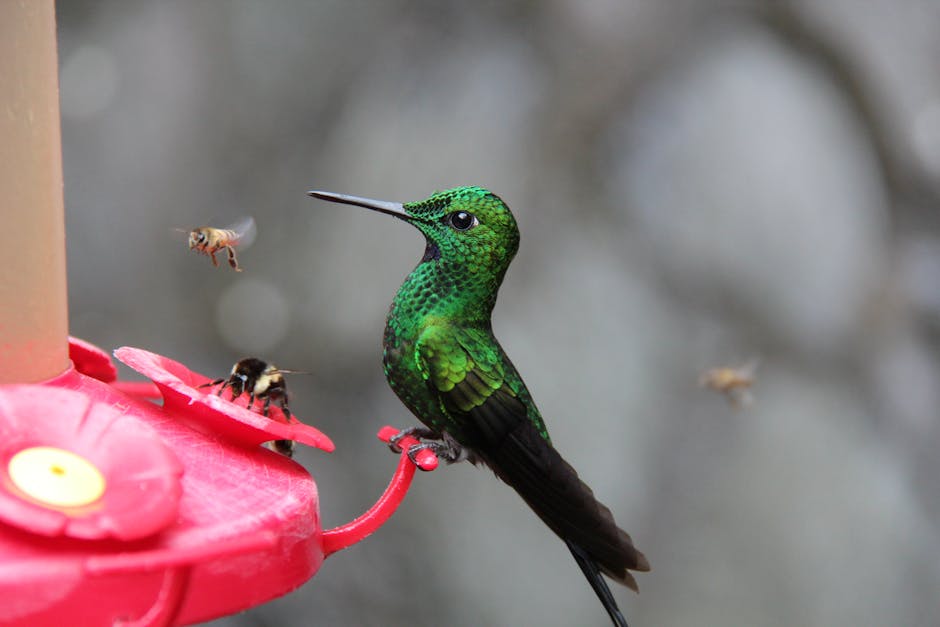
Are you tired of finding bees swarming around your hummingbird feeder every time you try to enjoy watching those tiny, colorful birds? You’re not alone.
Bees can quickly take over your feeder, making it hard for hummingbirds to get their share—and creating a sticky, buzzing mess for you to clean up. But don’t worry, there are simple and effective ways to keep bees away without harming them or your feathered friends.
Keep reading to discover easy tips that will let you enjoy the beauty of hummingbirds without unwanted visitors crashing the party.

Credit: www.yahoo.com
Why Bees Are Attracted To Feeders
Bees love sweet nectarbecause it gives them energy. The nectar in hummingbird feeders is very sugary. This sweetness is similar to flower nectarthat bees usually gather. Bees can easily taste the sugar and get attracted to the feeders.
Feeder designalso plays a big role. Feeders with large openings let bees crawl inside easily. They can reach the nectar without trouble. Some feeders have small holes or bee guards, which make it hard for bees to enter. This helps keep bees away while letting hummingbirds feed.
- Wide feeder ports attract bees more
- Bee guards block bee access but allow hummingbirds
- Red color attracts hummingbirds, not bees
- Placing feeders in the shade can reduce bee visits
Choosing Bee-resistant Feeders
Feeders with bee guardshave small barriers around feeding ports. These barriers keep bees from reaching the nectar but let hummingbirds feed easily. Bee guards work well because bees are larger and cannot fit through the small openings.
Choosing the right feeder shape also helps. Some shapes are less friendly to bees. For example:
- Vertical feeding portsmake it hard for bees to land.
- Tube-shaped feederswith tiny holes limit bee access.
- Feeders with red coloringattract hummingbirds but not bees.
Using feeders with these features reduces bee visits. It keeps the nectar for hummingbirds only.
Placement Strategies To Avoid Bees
Placing feeders away from flowers and shady spots helps reduce bee visits. Hanging feeders higher and using bee guards also keeps bees at bay. Regularly cleaning feeders stops sticky nectar that attracts bees.
Location Tips For Feeders
Place feeders away from flowers. Bees love flowers. Shade can help too. Bees prefer sunny spots. Keep feeders high from the ground. Bees usually fly low. Choose a quiet location. Bees avoid noise and movement.
Using Multiple Feeders To Distract Bees
- Use more feeders to confuse bees.
- Place feeders at different heights.
- Feeders far apart keep bees guessing.
- Change feeder spots often.
- Use feeders with bee guards.

Credit: www.facebook.com
Natural Repellents And Deterrents
Using safe scentshelps keep bees away from feeders. Scents like mint, citronella, and eucalyptusare natural bee repellents. Placing cotton balls soakedin these oils near feeders can discourage bees.
Physical barriers also protect hummingbird feeders. Bee guards or mesh screens prevent bees from reaching nectar. These barriers allow hummingbirds to feed easily.
| Type | Details | Effectiveness |
|---|---|---|
| Bee Guards | Mesh covers on feeder ports | Blocks bees, lets hummingbirds feed |
| Traps | Sweet liquid traps away from feeder | Reduces bee numbers nearby |
| Natural Scents | Mint, citronella, eucalyptus oils | Repels bees without harm |
Maintaining And Cleaning Feeders
Regular cleaningof hummingbird feeders stops mold and fermentation. Use hot water and a brush to clean all parts. Avoid soap, as it can harm birds. Rinse feeders well after washing. This keeps the nectar fresh and safe.
Replace nectar every 2 to 3 daysduring warm weather. In cooler weather, change it every 4 to 5 days. Old nectar ferments quickly and attracts bees. Fresh nectar keeps hummingbirds happy and bees away.
- Empty feeder completely before cleaning
- Use a solution of 1 part vinegar to 4 parts water for extra cleaning
- Dry feeder parts fully before refilling
- Keep feeders in shaded areas to slow fermentation

Credit: www.hummingbirdsociety.org
Alternative Food Sources For Bees
Planting bee-friendly flowersnear hummingbird feeders helps keep bees busy. Flowers like lavender, sunflowers, and clover attract bees with their nectar and pollen. This offers bees a natural food source away from your feeders.
Creating separate bee feedersis another great way to protect hummingbirds. Use a shallow dish with sugar water for bees. Place it a few feet away from the hummingbird feeder. This keeps both bees and hummingbirds happy without fights over food.
Frequently Asked Questions
How Can I Stop Bees From Visiting Hummingbird Feeders?
Use bee-proof feeders with small feeding holes. Place feeders away from flowers to reduce bee attraction.
What Ingredients Keep Bees Away From Hummingbird Nectar?
Avoid using red dye or sweeteners like honey. Use plain sugar water to deter bees.
Can Feeder Placement Reduce Bee Problems Effectively?
Yes, hang feeders in shaded areas and away from bee nests or flower gardens to limit bee visits.
Conclusion
Keeping bees away from hummingbird feeders takes simple steps and patience. Clean feeders often to avoid attracting bees. Choose feeders with bee guards or smaller feeding ports. Place feeders in shaded spots to help hummingbirds stay comfortable. Try using feeders with red coloring, which bees dislike.
Watch your feeders regularly to catch bee problems early. Enjoy watching hummingbirds without the buzz of bees nearby. Small changes make a big difference in your garden. Keep your feeders safe and hummingbird-friendly all season long.