Are you ready to welcome more birds into your yard? Hanging bird houses is a simple way to attract beautiful feathered friends right outside your window.
But how do you make sure your bird house is safe, sturdy, and inviting? In this guide, you’ll learn easy steps to hang bird houses the right way. By the end, you’ll have the confidence to create a cozy home that birds will love.
Keep reading—you’re just moments away from turning your outdoor space into a lively bird haven!

Credit: us.amazon.com
Choosing The Right Bird House
Choosing the right spot is key for hanging bird houses safely. Secure them at the right height and away from predators to attract birds. Make sure the bird house is stable and faces a safe direction for the best results.
Materials And Designs
Wood is the best material for bird houses. It keeps birds warm and dry. Avoid plastic or metal because they can get too hot or cold. Look for designs with a sloped roof to stop rainwater. Ventilation holes help air flow and keep the house fresh. A removable side or roof makes cleaning easy.
Size Matters
Choose the size based on the bird species you want. Small birds need small houses, and bigger birds need bigger houses. A roomy inside space helps birds build nests comfortably. Too big or too small can scare birds away.
Entrance Hole Dimensions
| Bird Type | Entrance Hole Diameter (inches) |
|---|---|
| Wrens | 1 1/8 |
| Chickadees | 1 1/8 |
| Bluebirds | 1 1/2 |
| Nuthatches | 1 1/4 |
| Tree Swallows | 1 1/2 |
Best Locations For Placement
Bird houses should hang at a safe height. This keeps them away from predators. 3 to 10 feet is a good height. Keep bird houses far from busy areas. This prevents disturbing the birds. 10 feet away from feeders is ideal.
Bird houses need a mix of sunlight and shade. Too much sun can make them hot. Shade helps keep them cool. Place houses under trees or near bushes. This provides comfort for the birds.
Choose spots that help avoid predators. Keep houses away from cats and other animals. Use baffles to protect bird houses. They make it hard for predators to reach birds. High places are safer for birds.
Tools And Supplies Needed
Mounting hardwareincludes screws, nails, and brackets. These help fix bird houses to poles or trees. Choose rust-resistant metal for durability outdoors. Use screws for a stronger hold.
Protective gearkeeps you safe while hanging bird houses. Gloves protect your hands from splinters and sharp edges. Safety glasses shield your eyes from dust or flying debris. Wear sturdy shoes for good grip on ladders or uneven ground.
Additional accessoriesimprove bird house stability and protection. Use baffles to keep predators away. Rain shields help keep nests dry. Mounting poles or hangers can make positioning easier and safer.

Credit: www.housebeautiful.com
Step-by-step Hanging Process
Choose a spot that is safe and quiet for birds. The location should be away from strong winds and direct sunlight. It is best to hang the bird house at least 5 feet above the ground. Trees, poles, or building walls work well as mounting points. Make sure the spot is visible and easy to reach for cleaning.
- Use nails, screws, or brackets to attach the house firmly.
- Mount on a sturdy tree branch or pole to avoid swinging.
- Avoid using wire that can harm birds.
- Check stability regularly to prevent falling.
Secure the bird house tightly to stop it from moving in the wind. Use weather-resistant materials like stainless steel screws. Add padding between the house and mounting surface to protect the wood. Check the fixings every few months for safety. Proper securing keeps birds safe and happy.
Maintenance And Monitoring
Regular cleaningkeeps bird houses safe and inviting. Remove old nesting materials after the breeding season. Use a brush and mild soap to scrub inside. Rinse well and let it dry before rehanging. This stops parasites and disease from spreading.
Seasonal changes need adjustments. In colder months, check if the house is secure against wind. Move the house if it faces harsh sun or heavy rain. Add extra insulation by placing straw inside during winter. This helps birds stay warm and protected.
Check for damageoften. Look for cracks, loose parts, or holes. Repair or replace broken pieces to keep the house sturdy. Ensure the entrance hole is not blocked. A safe home attracts more birds and keeps them safe.
Common Mistakes To Avoid
Improper placementcan make birdhouses unsafe or unused. Avoid areas with too much sun or strong winds. Place houses 5 to 10 feet off the ground for safety. Keep entrances away from busy paths to reduce stress on birds. Facing the entrance away from prevailing winds helps protect birds.
Choosing the wrong materialsaffects durability and safety. Use untreated wood to avoid harmful chemicals. Avoid metal or plastic that can get too hot or cold. Ensure the roof is waterproof to keep birds dry. Use nails or screws, not glue, to secure parts.
Ignoring local wildliferisks attracting predators or pests. Check which birds live nearby and their needs. Avoid placing houses near areas with many cats or snakes. Keep food and water sources close but not too close. Clean birdhouses regularly to prevent parasites.

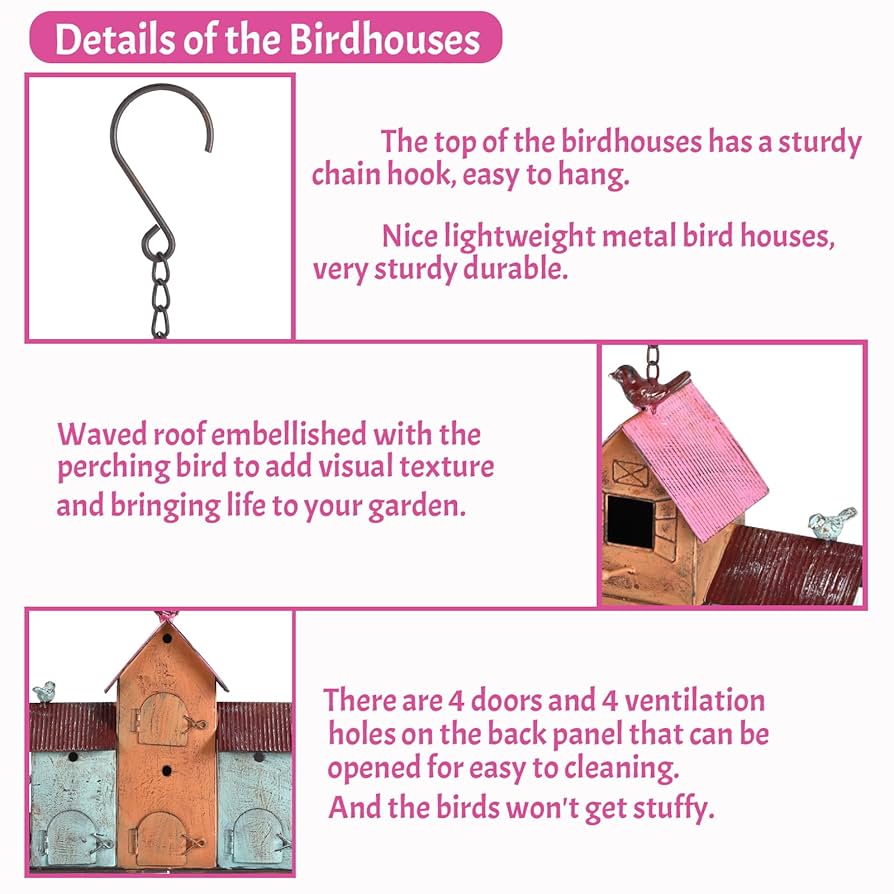
Credit: www.amazon.com
Frequently Asked Questions
How High Should Bird Houses Be Hung?
Bird houses should be hung 5 to 10 feet above the ground to keep birds safe from predators.
What Type Of Tree Is Best For Hanging Bird Houses?
Choose sturdy trees with strong branches that can hold the bird house without shaking too much.
How Do I Keep Predators Away From Bird Houses?
Use metal baffles or place houses on smooth poles to stop predators like cats and squirrels.
Conclusion
Hanging bird houses brings nature closer to your home. Place them in safe, quiet spots. Use sturdy hooks or poles for support. Check them often to keep birds safe. Enjoy watching birds build nests and raise chicks. With care, your bird houses will last for years.
Small efforts create a happy space for birds. Try it and see the birds visit often. Simple steps make a big difference for wildlife.