
Have you ever seen a bird with a huge, colorful beak that looks almost like a helmet? That’s a hornbill bird, one of nature’s most fascinating creatures.
If you think you know birds, wait until you learn about this unique species. You’ll discover why hornbills are special, how they live, and what makes their appearance so striking. Keep reading to find out everything you need to know about the hornbill bird—and why it might just become your new favorite!

Credit: wildlifenomads.com
Hornbill Species And Habitat
Hornbills are a group of birds with many different species. They mostly live in tropical and subtropical areas. Many species live in forests of Asia and Africa. These birds prefer dense woods, where they find food and shelter. Some species live in open savannas or grasslands.
Hornbills have large, curved bills and a casque on top. Their size and color vary a lot between species. Some hornbills are mostly black or brown, while others have bright colors on their heads.
| Hornbill Species | Habitat |
|---|---|
| Great Hornbill | Forests in India and Southeast Asia |
| Southern Ground Hornbill | Open savannas in Africa |
| Rufous Hornbill | Tropical forests in the Philippines |
| Purple Hornbill | Forests and woodlands in Southeast Asia |
Unique Physical Features
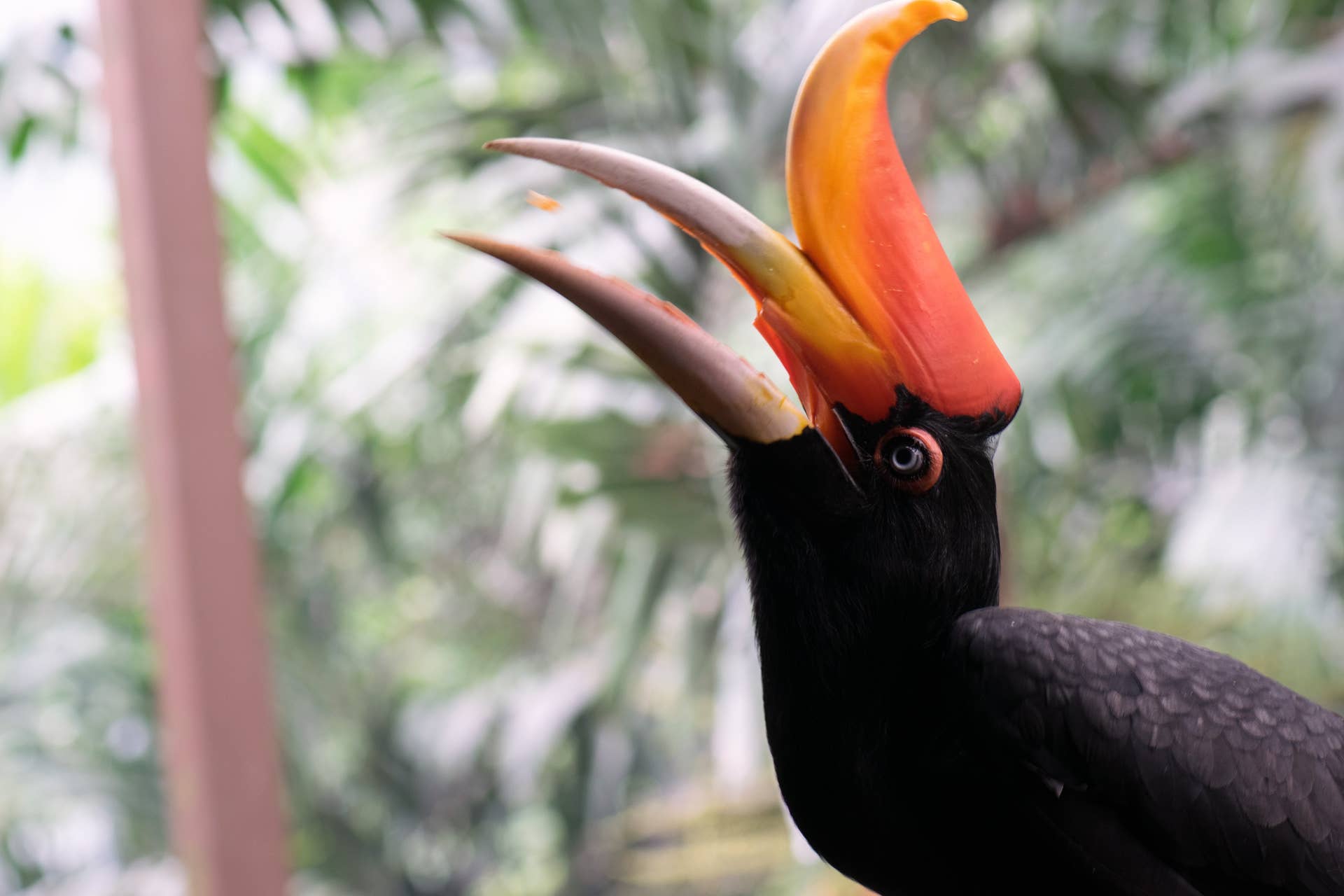
Hornbill birds have very large, curved billsthat look like a helmet. This part is called a casque. It sits on top of the bill and is often brightly colored. The casque helps hornbills make loud calls.
Their eyes are sharpand surrounded by a patch of bare skin. This skin can change color. It helps them show emotions or attract mates.
Hornbills have strong wingsbut they don’t fly very fast. They use their wings to move through dense forests. Their tail feathers are long and help with balance.
Diet And Feeding Habits
Hornbill birds have a varied diet. They love to eat fruits like figs and berries. These birds also enjoy insects, which they catch skillfully. Small animals like lizards and mice are part of their diet too. Hornbills use their big, strong beaks to break open hard fruits. They have a unique way of tossing food into the air and catching it.
Hornbills are important for spreading seeds. They eat fruits and later drop the seeds far away. This helps grow new plants. These birds often feed in pairs or small groups. Their feeding habits help the environment. Hornbills play a big role in keeping forests healthy.
Credit: owlcation.com
Breeding And Nesting Behavior
Hornbillshave a unique way of nesting. The female stays inside a tree hole. She seals the entrance with mud, droppings, and fruit pulp. Only a small slit remains open. The male feeds her and the chicks through this slit. This helps protect them from predators.
The female stays inside until the chicks are strong enough. During this time, she molts and cannot fly. The male must bring food every day. Once the chicks grow, the female breaks the seal and leaves the nest. Both parents then care for the young outside the nest.
Role In Ecosystems
Hornbill birdsplay a vital role in many ecosystems. They help spread seeds from the fruits they eat. This seed dispersalallows many plants and trees to grow in new areas. Their actions support forest regenerationand maintain healthy habitats.
Hornbills also help control insect populations by feeding on them. This keeps the balance in nature and protects plants from too many bugs. They often live in large trees, which provide homes for many other animals.
By creating nesting holes in trees, hornbills offer shelter to other small creatures after they leave. This makes them important ecosystem engineers. Their presence shows a healthy and balanced environment.

Credit: wildlifenomads.com
Frequently Asked Questions
What Does A Hornbill Bird Look Like?
Hornbills have large curved bills with a casque on top. They are colorful and medium to large in size.
Where Do Hornbill Birds Live?
Hornbills live mainly in tropical forests of Africa and Asia. They prefer wooded areas with plenty of trees.
What Do Hornbill Birds Eat?
Hornbills eat fruits, insects, and small animals. Their diet varies depending on the species and habitat.
Conclusion
Hornbill birds are unique and fascinating creatures. Their large beaks and bright colors catch attention easily. They live mostly in forests and help spread seeds. Hornbills play an important role in nature’s balance. Watching them can teach us about wildlife and nature.
Protecting their homes means saving many other animals too. Learning about hornbills helps us appreciate the wild world. Their special habits make them stand out among birds. Remember, every bird has a story worth knowing.
One Response