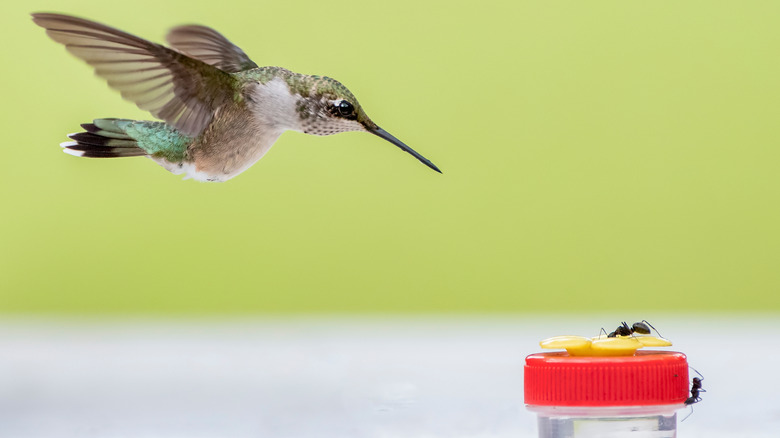
Are you tired of seeing ants swarm your hummingbird feeder, ruining the sweet nectar meant for your tiny visitors? Keeping ants away can be tricky, but it’s not impossible.
In this post, you’ll discover simple and effective ways to protect your feeder and enjoy watching hummingbirds without those unwanted guests stealing the show. Stick around, because these easy tips will save your feeder and bring more vibrant hummingbirds right to your backyard.

Credit: www.facebook.com
Why Ants Are Attracted To Feeders
Ants are drawn to hummingbird feeders because of the sweet nectarinside. This sugary liquid is a perfect food sourcefor ants. They can sense the sugar from a distance and quickly find their way to the feeder.
Feeders often have small leaks or drips. These leaks leave tiny drops of nectar outside the feeder. Ants follow these drops and invade the feeder to get more.
Warm weather makes ants more active. They search for food to feed their colonies. The nectar in feeders is easy to reach and full of energy.
Some feeders are designed with ant guardsor barriers. Without these, ants can easily climb and get inside. Ants also like the shelter that the feeder provides, making it a good spot to build nests nearby.

Credit: www.farmhouse40.com
Choosing Ant-proof Feeder Designs
Ant-proof hummingbird feedersare designed to keep ants away from the nectar. These feeders often have built-in features like ant moats—small water-filled barriers that ants cannot cross. The moat traps ants before they reach the nectar ports. Some designs include ant guardsthat block ants physically.
Materials also matter. Feeders made of glass or metalare easier to clean and less attractive to ants compared to plastic. Shapes with few creviceshelp prevent ants from hiding.
- Choose feeders with moats or ant guards.
- Look for smooth surfaces for easy cleaning.
- Avoid complex parts where ants can hide.
- Metal and glass feeders work best against ants.
Natural Ant Deterrents To Use
Keeping ants away from hummingbird feeders is easy with natural deterrents. Use a shallow dish filled with water under the feeder’s hook. Ants cannot cross water, so this creates a moat barrier. Another good option is to apply a thin layer of vaselineor petroleum jelly around the feeder’s hanging hook. Ants dislike sticky surfaces and will avoid climbing there.
Sprinkling cinnamonor chili powdernear the feeder can also keep ants at bay. These spices have smells ants hate. Wiping the feeder and hanger regularly with white vinegaror soapy water removes ant trails and stops more ants from coming.
Cleaning And Maintenance Tips
Regularly clean the feeder with warm, soapy water to remove sticky residue. Apply a thin layer of petroleum jelly around the feeder’s base to block ants. Placing the feeder on a hanger with a water moat also keeps ants away.
Regular Cleaning
Clean the feeder every few days. Use warm water and soap. Rinse it well to remove all soap. Dry it completely before use.
Use Ant Moats
Ant moats keep ants away. Fill the moat with water. Ants can’t cross the water. They give up and leave.
Apply Natural Repellents
Use natural sprays to deter ants. Vinegar and lemon juice work well. Spray around the feeder base. Do not spray inside the feeder.
Positioning The Feeder
Hang the feeder away from trees. Ants use branches to reach feeders. Place it in open spaces. High places are best.
Check For Leaks
Leaking feeders attract ants. Check for leaks regularly. Tighten all parts well. Replace broken feeders immediately.
Setting Up Physical Barriers
Use a moat or water barrieraround the feeder’s hanger. Ants cannot cross water. This simple trick stops ants from reaching the nectar.
Wrap the feeder’s hanging wire with tape or a sticky barrier. Sticky substances trap ants before they climb up.
- Place a small dish of water under the hanger.
- Apply a band of petroleum jelly on the feeder pole.
- Use commercial ant barriers designed for feeders.
Keep the feeder clean and dry around the base. Ants are less likely to stay if there is no food residue.

Credit: www.facebook.com
Frequently Asked Questions
How Can I Stop Ants From Reaching My Hummingbird Feeder?
Use ant moats filled with water to create a barrier ants can’t cross. Clean feeder regularly.
What Homemade Solutions Repel Ants Near Feeders?
Mix water and vinegar or use baby powder around the feeder base to keep ants away.
Does Placing Feeders Away From Plants Reduce Ants?
Yes, placing feeders away from plants and trees lowers ant access and helps protect the feeder.
Conclusion
Keeping ants away from your hummingbird feeder is easier than you think. Clean the feeder often to stop ants from coming back. Use simple tricks like water moats or sticky barriers. Place the feeder where ants find it hard to reach.
Watch your feeder regularly to catch ants early. These small steps keep hummingbirds happy and ants away. Enjoy watching your birds without worrying about ants. Simple care makes a big difference for your feeder.