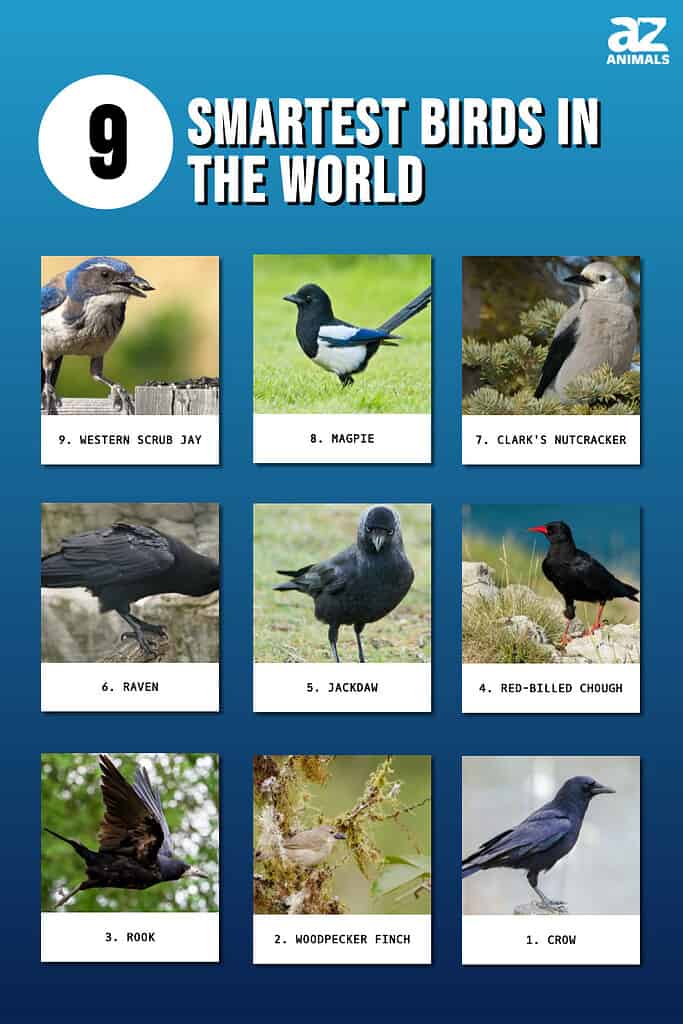
Have you ever watched a bird solve a puzzle or mimic human speech and wondered, “Are birds intelligent?” This intriguing question invites you to explore the fascinating world of avian intelligence.
Birds are more than just creatures of the sky; they are problem-solvers, communicators, and, in some cases, even tool users. Imagine the thrill of discovering that the feathery friend perched in your backyard might possess a mind that rivals some of the smartest animals on the planet.
Dive into this article to uncover the secrets of bird intelligence, and prepare to be amazed by the cleverness hidden within those wings. What you learn might change how you see these incredible creatures forever.
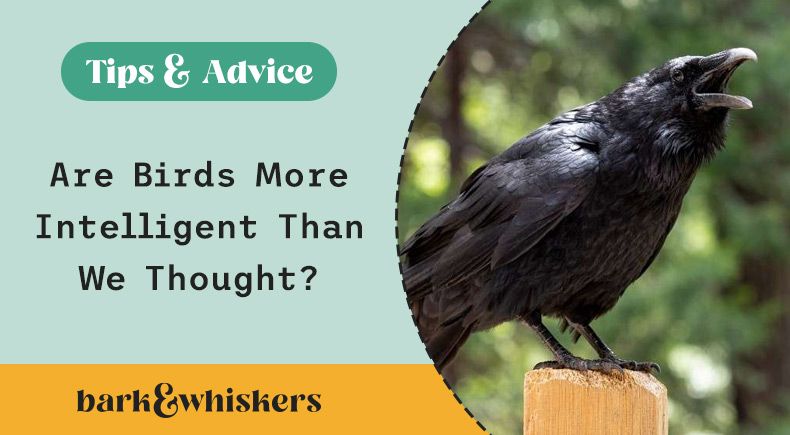
Credit: www.barkandwhiskers.com
Avian Brainpower
Birds exhibit remarkable intelligence, demonstrating problem-solving skills and adaptability. Their ability to use tools and mimic sounds showcases cognitive prowess. Studies reveal complex behaviors, suggesting sophisticated avian brainpower beyond mere instinct.
Avian Brainpower is a fascinating topic that challenges our assumptions about intelligence. Birds might surprise you with their mental capabilities. From problem-solving to communication, these feathered creatures showcase skills that rival mammals.Understanding Avian Brain Structure
Birds have unique brains. Unlike humans, they lack a neocortex, yet they display remarkable intelligence. The avian brain’s structure allows for complex behaviors and skills. The pallium, a bird’s brain region, manages advanced tasks. It’s involved in social interactions, learning, and memory. This might explain why some birds can mimic human speech.Problem-solving Abilities
Did you know some birds can solve puzzles? Crows, for instance, use tools to obtain food. They can bend wires to fish out treats from containers. Parrots demonstrate problem-solving by unlocking cages. Their ability to assess and act on situations is impressive. Next time you watch a bird, consider its potential for creativity.Communication Skills
Birds communicate in sophisticated ways. They use vocalizations, gestures, and even dance. Each song or call can convey different meanings. Consider the lyrebird, known for mimicking sounds. It replicates chainsaws, car alarms, and other noises. This skill showcases their adaptability and intelligence.Social Intelligence
Birds often live in flocks, requiring social skills. They understand hierarchies and maintain relationships. Ravens, for example, engage in complex social games. You might notice birds sharing food or warning each other of danger. Their social intelligence ensures survival and cooperation.Learning And Memory
Birds exhibit impressive learning capabilities. They can remember locations, people, and sounds. Pigeons recognize human faces and navigate cities. Have you ever fed birds at a park? Some remember your kindness and return. Their memory plays a crucial role in their daily life.How Can You Encourage Bird Intelligence?
Your interaction with birds can boost their brainpower. Provide puzzles or toys that challenge them. Stimulate their environment with varied sounds and experiences. You might even teach a bird simple tricks. With patience, they can learn to perform tasks. Engage them, and watch their intelligence unfold. In your own backyard, observe birds and their behaviors. What surprising skills do they display? Their actions may prompt you to rethink what intelligence truly means.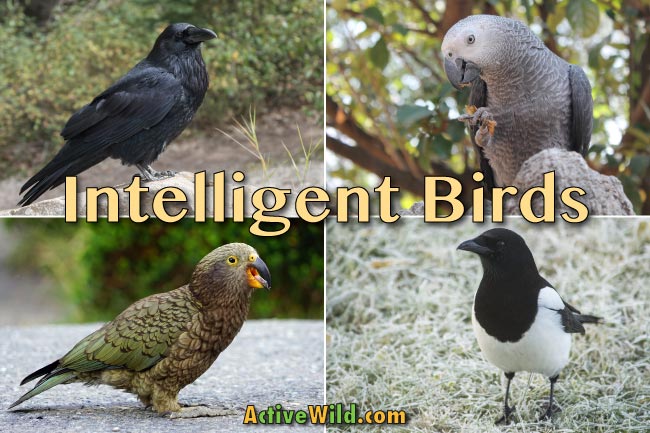
Credit: www.activewild.com
Cognitive Skills
Birds exhibit remarkable cognitive skills, showcasing problem-solving abilities and tool use. These feathered creatures demonstrate intelligence through complex social behaviors and communication techniques. Observations reveal their adaptability and resourcefulness in navigating diverse environments.
Birds have long fascinated scientists and birdwatchers alike with their remarkable cognitive skills. These feathered creatures are more than just pretty singers or skilled flyers. They exhibit complex behaviors that challenge our understanding of intelligence. As you learn more about birds, you may find yourself questioning how these seemingly simple animals can perform such intricate tasks. Let’s dive into some of the cognitive skills that highlight bird intelligence.Problem-solving Abilities
Birds demonstrate impressive problem-solving abilities that often rival those of mammals. Have you ever seen a crow drop a nut onto a road, waiting for a car to crack it open? This clever tactic shows birds can understand cause and effect relationships. Parrots, too, are known for their ability to solve puzzles. They can unlock cages or retrieve food from difficult places. Their adaptability and quick thinking make them stand out in the animal kingdom. Have you observed any bird solving a problem in your backyard?Tool Use In Birds
Some birds use tools to make their lives easier, a skill once thought to be unique to humans. The New Caledonian crow is famous for its tool-making abilities. It crafts sticks into hooks to extract insects from tree bark. Woodpecker finches use cactus spines to dig out bugs from crevices. This behavior suggests a level of foresight and planning. Have you ever wondered what other secrets these avian toolmakers might be hiding?Memory And Navigation
Birds possess extraordinary memory skills, especially when it comes to navigation. Migratory birds travel thousands of miles with precision and accuracy. They rely on their memory of landmarks, the sun, stars, and even the Earth’s magnetic fields. Some species, like the Clark’s nutcracker, can remember the location of thousands of seed caches for months. This ability ensures their survival during harsh winters. How do you think your memory compares to these exceptional avian navigators? Birds continue to surprise us with their intelligence and adaptability. Their cognitive skills challenge our perceptions of animal intelligence and inspire us to rethink what it means to be smart. Next time you spot a bird, consider the complex mind behind those bright eyes.Communication And Social Behavior
Birds show cleverness through their communication and social behavior. Parrots mimic sounds and words, while crows use tools. These actions reflect problem-solving skills, suggesting intelligence beyond instinct.
Birds are more than just pretty creatures with colorful feathers. They have an impressive ability to communicate and navigate social landscapes, revealing levels of intelligence that might surprise you. From complex vocalizations to intricate social structures, birds demonstrate fascinating behaviors that can make you reconsider how you view these winged wonders.Complex Vocalizations
Birds use a variety of sounds to communicate, each with a specific purpose. Some birds can mimic human speech and even other sounds they hear in their environment. Imagine walking through a forest and hearing what sounds like a car alarm, only to discover it’s a bird mimicking the noise. This ability to create complex vocalizations is not only entertaining but also a testament to their cognitive skills. The next time you hear a bird sing, consider what message it might be conveying. Is it attracting a mate, warning of danger, or simply chatting with neighbors?Social Structures
Birds don’t just fly solo; many species have intricate social structures that dictate their interactions. Some birds form lifelong pair bonds, while others live in large flocks with clear hierarchies. Think of penguins huddling together to stay warm or geese flying in a V formation to maximize efficiency. These behaviors show teamwork and understanding of their environment. How do these social structures affect their survival and adaptation? Observing birds can offer insights into the importance of community and cooperation.Learning From Peers
Birds learn from each other in remarkable ways. Young birds often imitate adults to master skills like finding food or avoiding predators. Have you ever watched a group of crows solving a puzzle together? Their collaborative efforts and ability to learn from one another highlight their problem-solving capabilities. Consider the parallels between birds and humans. How can learning from peers be beneficial in your own life? Birds might not have textbooks or teachers, but their social learning processes are undeniably effective. Whether it’s through vocal communication, social interactions, or peer learning, birds exhibit intelligence that challenges traditional notions of animal behavior. As you observe birds in your backyard or local park, pay attention to these subtle yet complex interactions. You might discover a new appreciation for the intelligence of these feathered friends.
Credit: www.smorescience.com
Emotional Intelligence
Birds are not just creatures of instinct; they possess emotional intelligence that rivals many mammals. Their ability to exhibit feelings and respond to emotional cues is astounding. This emotional depth is not only fascinating but also raises questions about the complexity of their minds.
Empathy And Affection
Have you ever noticed how birds sometimes comfort each other? If you’ve ever seen a pair of birds grooming one another, you’ve witnessed a form of empathy. They seem to understand when their companions are stressed or unwell and respond by offering gentle attention.
Consider parrots, known for their affectionate nature. They bond closely with their human caretakers, often mimicking sounds and actions. This behavior suggests a level of emotional connection and understanding, similar to what you might find in more traditional pets like dogs or cats.
Can birds sense your mood? Many bird owners believe so. Parrots, for instance, might become quiet when their owner is upset, showing a level of emotional sensitivity that’s both heartwarming and intriguing.
Play And Joy
Birds are not all about survival; they play and find joy in their surroundings. Watch a flock of sparrows as they chase each other through the trees. Their playful antics are not just about territory; they seem to enjoy the thrill of the chase.
Parrots and crows are known for their playful nature. They might play tricks on each other or invent games with objects. When a crow slides down a snowy rooftop, it’s hard to deny the joy in its actions. Their capacity for play shows a level of emotional intelligence that rivals many mammals.
Do you think your bird enjoys playing with you? Many bird owners have noticed their pets engage in interactive play, suggesting a shared sense of joy and companionship.
Birds, with their empathy and capacity for joy, remind us that intelligence is not just about logic and problem-solving. It’s also about feeling and connecting. So, next time you watch birds in your backyard, consider the emotional world they live in. Could their emotional intelligence be more complex than we realize?
Comparisons With Mammals
Birds display intelligence comparable to mammals through problem-solving skills and tool use. Their cognitive abilities rival some primates, showcasing impressive adaptability. Studies reveal birds can learn new tasks, recognize themselves in mirrors, and even communicate complex ideas.
Have you ever wondered if birds are as smart as mammals? This question intrigues many animal lovers and scientists alike. Birds and mammals share some fascinating similarities and differences when it comes to intelligence. By comparing them, we can gain a deeper understanding of what makes birds uniquely intelligent.Brain Structure Differences
Birds have smaller brains compared to mammals, yet they are densely packed with neurons. This means that, pound for pound, birds have more computing power in their brains. The avian brain is organized differently, with a part called the pallium taking on the role similar to the mammalian cortex. During a bird-watching trip, you might notice a crow solving a complex problem, like figuring out how to open a bin. This is possible because of their highly efficient brain structure. Does this mean size doesn’t always matter in terms of intelligence?Intelligence Benchmarks
To assess intelligence, scientists often compare problem-solving skills, memory, and communication abilities. Birds excel in these areas, much like many mammals. Parrots, for instance, can mimic human speech and understand concepts like counting. Consider this: A scrub jay can remember the location of thousands of hidden food caches. Such feats of memory rival those of some mammals. Have you ever seen a bird use a tool? This behavior is another benchmark of intelligence, showing that birds can use objects to achieve goals, similar to some primates. In your backyard, you might observe a squirrel and a bird vying for the same bird feeder. Both animals display clever tactics to get to the food, yet their methods differ. What insights can we gain from watching these creatures in action? By exploring these comparisons, we realize that intelligence in birds is not just about mimicking or simple tricks. It’s about complex thought processes, problem-solving, and adaptability. What do you think this says about the potential of other creatures we share our planet with?Case Studies Of Smart Birds
Smart birds like crows and parrots show remarkable intelligence. They solve puzzles and use tools, proving their cleverness. These case studies highlight the surprising mental abilities of birds, challenging our understanding of animal intelligence.
Birds have long fascinated humans with their remarkable abilities, leading many to wonder just how intelligent they truly are. While some may dismiss birds as simple creatures, several species demonstrate extraordinary cognitive skills. Let’s dive into some intriguing case studies that highlight the intelligence of our feathered friends.Crows And Ravens
Crows and ravens, members of the corvid family, are renowned for their problem-solving skills. A personal encounter in a park revealed a crow using a stick to extract food from a narrow crevice. This behavior wasn’t taught; it was a spontaneous demonstration of tool use. Research shows these birds can recognize human faces and remember them for years. Imagine being identified by a crow after a single encounter! Their ability to understand cause and effect, and even plan for the future, is akin to that of great apes. Have you ever considered what a crow’s life must be like, equipped with such a memory and strategic thinking? Their intelligence challenges our understanding of animal cognition.Parrots And Macaws
Parrots and macaws are not just colorful companions; they are brilliant communicators. Alex, the famous African Grey Parrot, could identify colors, shapes, and even express desires. This isn’t mere mimicry—it’s comprehension. Owners often find their parrots quickly adapt to routines and learn new words rapidly. Have you noticed your parrot learning phrases without explicit training? Their ability to understand context and respond accordingly is impressive. These birds also display social intelligence, forming bonds with humans and other animals. It’s worth pondering how their communication skills reflect their emotional depth. Bird intelligence is not a myth. Crows and parrots offer compelling evidence of their cognitive abilities. What other secrets might these smart birds be hiding, waiting for us to discover?Implications Of Avian Intelligence
The intelligence of birds is a fascinating subject. Many bird species demonstrate remarkable cognitive skills. This insight into avian intelligence has important implications. It affects how we view conservation and ethics related to birds. Understanding their intelligence helps us make informed decisions.
Conservation Efforts
Bird intelligence can reshape conservation strategies. Intelligent birds adapt to their environments. This adaptability may influence their survival. Recognizing this trait allows conservationists to tailor their efforts. Protecting habitats becomes crucial for these smart creatures. They need complex environments to thrive.
Conservation programs can benefit from this knowledge. Better strategies can be developed to support intelligent species. This ensures their survival in the wild. Educating the public about bird intelligence is also important. It raises awareness and support for conservation efforts.
Ethical Considerations
Understanding avian intelligence brings ethical questions. How should we treat these intelligent beings? Their cognitive abilities suggest they experience emotions. This understanding changes how we interact with them. It urges us to consider their welfare in captivity.
Ethical considerations extend to bird ownership. Birds in captivity may require mental stimulation. Owners must provide enriching environments. This ensures their mental health and happiness. The intelligence of birds also impacts research ethics. Studies must respect their cognitive abilities and emotional needs.
Frequently Asked Questions
How Intelligent Are Birds Compared To Mammals?
Birds exhibit remarkable intelligence, comparable to some mammals. They possess problem-solving skills and the ability to use tools. Certain bird species, like crows and parrots, demonstrate advanced cognitive abilities. Studies show they can recognize themselves in mirrors and understand cause-and-effect relationships.
Their intelligence often surprises researchers and bird enthusiasts alike.
Can Birds Understand Human Language?
Birds cannot understand human language as we do. However, certain species, like parrots, can mimic human speech. They can learn to associate words with meanings through repetition and training. Birds like African Grey Parrots have shown the ability to understand simple concepts.
Their communication skills are a testament to their intelligence.
Do Birds Have Problem-solving Skills?
Yes, many birds exhibit impressive problem-solving skills. Crows and ravens are particularly known for this ability. They can solve complex puzzles and remember solutions for future use. Their intelligence enables them to adapt to new situations. These skills are often demonstrated through experiments and observations in the wild.
Are Birds Capable Of Using Tools?
Certain bird species are known for using tools. Crows and woodpecker finches are prime examples. They use sticks to extract insects from tree bark. This tool usage highlights their cognitive abilities and adaptability. Observing birds in their natural habitats often reveals these fascinating behaviors.
Conclusion
Birds show surprising intelligence in many ways. They solve problems. Use tools. Even communicate. Parrots can mimic human speech. Crows remember faces and plan. Birds have big brains for their size. They learn from each other. This helps them survive.
Their intelligence is complex and fascinating. Observing birds offers insight into their smart world. Understanding them better enriches our knowledge of nature. Birds aren’t just beautiful; they’re clever too. So next time you see a bird, think of its hidden talents.
Appreciate the smart creatures sharing our world.